

B — The Rooted Shelf
The herbs gathered upon the second shelf speak of balance, belonging, and the wisdom of steady growth.
Here we find nourishing foods, protective roots, flowering meadow plants, and time-honoured herbal allies. Some encourage cleansing, some offer comfort, and others remind us that strength is often cultivated quietly, season by season.
As with all entries within the Keeper's Shelf, these plants are offered as an invitation to learn their stories, honour their traditions, and deepen your relationship with the living wisdom they carry.

Balm of Gilead
Populus balsamifera
Element: Fire + Water
Threshold: A resinous balm of warmth and mending, offering comfort where the body feels sore, weathered, or worn.
Keeper’s Note
Balm of Gilead is gathered from the sticky, fragrant buds of poplar trees — a spring medicine treasured for its rich resin and soothing touch. It carries the feeling of old forest salve: warm, protective, and deeply comforting. In the Keeper’s Shelf, it belongs with the mending plants, the ones kept close for tender skin, sore muscles, and the little aches of being human.
Traditional Uses
Balm of Gilead has traditionally been infused into oil and made into salves, balms, and liniments. It has been used externally for dry skin, minor irritation, sore muscles, bruises, small scrapes, and weather-worn hands. Its resinous buds are valued for their aromatic, comforting quality and their long history in folk first-aid preparations.
Where It Grows
Balsam poplar grows in cool northern places where the land holds moisture — along riverbanks, wetlands, low woods, and the soft edges of fields and forests. It often appears where water moves nearby, rooting itself in damp soil and open light.
In late winter and early spring, before the leaves unfurl, the tree offers its fragrant sticky buds — resin-rich, aromatic, and treasured for Balm of Gilead preparations.
How to Harvest
Harvest the unopened sticky buds in late winter or early spring, ideally from fallen branches after wind or weather. Take only a small amount from living trees so the tree can continue growing well. Place the buds in oil to infuse slowly, then strain and use the oil in salves or topical preparations.
Gentle Safety Note
Balm of Gilead is generally used externally in oils, salves, and balms. Avoid use on deep wounds, serious burns, infected skin, or broken skin unless guided by a qualified practitioner. Use caution if you are sensitive or allergic to aspirin, salicylates, propolis, poplar, willow, or cottonwood trees. Always patch test before using on larger areas, and use care during pregnancy, nursing, with medications, or with ongoing health conditions.

Basil
Ocimum basilcum
Element: Fire + Air
Threshold: A bright hearth herb of warmth and welcome, bringing life, comfort, and a little everyday magic to the home.
Keeper’s Note
Basil is one of the great kitchen companions — a fragrant garden herb long associated with protection, abundance, and the simple act of gathering people around the table. Its fresh leaves carry a gentle warmth that uplifts both food and spirit. In the Keeper’s Shelf, Basil belongs with the comforting herbs: the ones that remind us that nourishment can be found in ordinary moments and shared meals.
Traditional Uses
Basil has traditionally been used to support healthy digestion and ease occasional gas, bloating, and mild stomach discomfort. It has also been enjoyed as a calming herbal tea, offering gentle support during times of stress or mental fatigue. Fresh or dried, Basil has long been valued as both a culinary and household herb, bringing flavour, warmth, and quiet vitality to daily life.
Where It Grows
Basil thrives in warm, sunny places with rich, well-drained soil. Native to tropical regions of Asia and Africa, it is now grown in gardens, containers, windowsills, and herb beds around the world. Regular harvesting encourages the plant to become full and bushy.
How to Harvest
Harvest Basil by pinching or snipping the upper leaves and stems, ideally before the plant flowers for the best flavour and aroma. Gather on a dry day, taking only what you need while encouraging new growth. Basil may be used fresh or dried by hanging small bundles in a warm, airy place away from direct sunlight.
Gentle Safety Note
Basil is generally considered a gentle culinary and tea herb. Large medicinal amounts are not recommended during pregnancy or while taking blood-thinning medications without professional guidance. As with any herb, use caution with allergies, medications, or ongoing health conditions, and introduce new plants gradually.

Baobob
Adansonia digitata
Element: Earth + Water
Threshold: A bright yellow keeper of quiet truths, gathering what has scattered and gently drawing the body back together.
Keeper’s Note
Baobab is often called the Tree of Life, and for good reason. With its massive trunk, long lifespan, and nourishing fruit, it has fed, sheltered, and supported communities for generations. In the Keeper’s Shelf, Baobab belongs with the great sustaining plants — steady, ancient, and generous, offering food, fibre, moisture, and deep-rooted resilience.
Traditional Uses
Baobab fruit pulp has traditionally been used as a nourishing food, often stirred into water, porridges, sauces, and simple daily preparations. Its tangy pulp is valued for its fibre, minerals, and natural vitamin C content, making it a useful food for strength, hydration support, and replenishment in hot, dry regions.
The leaves have also been used as a cooked green in soups and stews, while the seeds may be roasted, ground, or pressed for oil depending on local tradition. Rather than a forceful medicinal herb, Baobab is best understood as food medicine — a tree that offers nourishment, moisture, and steadiness where the land is harsh and the body needs sustaining.
Where It Grows
Baobab grows in hot, dry regions of Africa, especially across savannas, open woodlands, and semi-arid landscapes where long dry seasons shape the land. It thrives in full sun, well-drained soil, and places where water is precious.
Its great swollen trunk stores moisture through drought, allowing the tree to stand as a living reservoir in harsh climates. Baobab is most often associated with sub-Saharan Africa, though related baobab species also grow in Madagascar and Australia.
How to Harvest
Baobab fruit is harvested once the hard outer shell has matured and the pulp inside has dried naturally. The fruit may be gathered after it falls, or carefully collected from the tree when fully ripe. Once opened, the dry pulp is separated from the seeds and shell, then sifted or powdered for use in drinks, foods, and nourishing preparations.
Leaves may be harvested young and tender in regions where Baobab grows abundantly, then used fresh or dried for later use. Bark should not be harvested casually, as careless stripping can injure the tree.
Gentle Safety Note
Baobab fruit pulp is generally used as a food, but its high fibre content may cause bloating or digestive discomfort if taken in large amounts. Introduce slowly if new to it. Use caution during pregnancy, nursing, with diabetes, digestive conditions, medications, or chronic illness. Choose clean, food-grade Baobab powder or pulp from a reputable source.

Bay (Laurel) Leaf
Laurus nobilis
Element: Fire + Air
Threshold: A leaf of clarity and quiet strength, long carried by those who seek wisdom, courage, and steady purpose.
Keeper’s Note
Bay Laurel is one of the old sacred herbs, woven through stories of poets, healers, and guardians. Its glossy evergreen leaves have long symbolized honour, protection, and clear seeing. In the Keeper’s Shelf, Bay belongs with the herbs that strengthen both hearth and spirit — bringing warmth to the home and a sense of calm order to everyday life.
Traditional Uses
Bay Laurel has traditionally been used to support healthy digestion and ease occasional bloating or heaviness after meals. The aromatic leaves have also been added to stews, broths, and herbal preparations for their warming and comforting qualities. In folk tradition, Bay has long been associated with protection, purification, and the encouragement of clear thought.
Where It Grows
Bay Laurel is native to the Mediterranean region and thrives in warm climates with well-drained soil and plenty of sunlight. It grows as an evergreen shrub or small tree and is commonly cultivated in herb gardens, courtyards, and containers around the world.
How to Harvest
Harvest mature, healthy leaves as needed throughout the growing season. Pick by hand or snip with clean scissors, taking only what the plant can comfortably spare. Leaves may be used fresh, but are most often dried in a warm, airy place away from direct sunlight and stored in a sealed container.
Gentle Safety Note
Bay Laurel is generally considered safe when used in normal culinary amounts. The whole dried leaves are very tough and should be removed from food before serving, as they can present a choking hazard. Use caution with concentrated herbal preparations during pregnancy, nursing, with medications, or ongoing health conditions, and always ensure you are using true Bay Laurel (Laurus nobilis) rather than ornamental look-alike species.

Baptisia
Baptisia tinctoria
Element: Earth + Fire
Threshold: A strong root of cleansing and defense, called upon only when the body’s boundaries need firm support.
Keeper’s Note
Baptisia is not a soft everyday herb. It is a strong, root-deep plant of defense, cleansing, and old herbal caution. Traditionally known as Wild Indigo, it has been used where the body feels burdened, stagnant, or overwhelmed. In the Keeper’s Shelf, Baptisia belongs with the guarded medicines — respected, powerful, and best approached with knowledge rather than casual use.
Traditional Uses
Baptisia root has traditionally been used by herbalists in small amounts for immune and lymphatic support, especially during times of throat, glandular, or systemic heaviness. It has also appeared in older folk preparations as a wash, gargle, or topical herb for troubled skin and irritated tissues.
This is not a gentle daily tea herb. Baptisia is best understood as a strong traditional remedy used carefully, usually under the guidance of an experienced herbalist.
Where It Grows
Baptisia is native to parts of eastern North America and grows in dry woods, open fields, sandy soils, woodland edges, and disturbed ground. It is a perennial plant in the pea family, with branching stems, small yellow flowers, and dark seed pods that appear after flowering.
How to Harvest
The root is the part most traditionally used and is usually harvested in the fall after the plant has died back, or in early spring before strong new growth begins. Because harvesting the root kills the plant, gather only where it is abundant and never from threatened or protected areas.
For most home herbal work, it is better to purchase properly identified Baptisia root from a trusted herb supplier rather than wild-harvesting.
Gentle Safety Note
Baptisia is a strong herb and should not be used casually. All parts of the plant may cause toxicity if misused, with possible nausea, vomiting, diarrhea, dizziness, or irritation. Avoid during pregnancy and nursing, and use caution with medications, autoimmune conditions, chronic illness, or immune-suppressing treatments. Internal use should be guided by a qualified herbal practitioner.

Bee Balm
Monarda didyma
Element: Fire + Air
Threshold: A bright woodland bloom that lifts the spirit, warms the body, and invites both bees and weary hearts to gather.
Keeper’s Note
Bee Balm is a joyful garden herb, known for its vibrant flowers and aromatic leaves. Long treasured by herbalists and pollinators alike, it carries a warming, uplifting nature that brings a sense of comfort and vitality. In the Keeper’s Shelf, Bee Balm belongs with the herbs that tend both hearth and heart — offering a little brightness when the days feel heavy.
Traditional Uses
Bee Balm has traditionally been used as a warming tea to support healthy digestion and bring comfort during seasonal colds and mild respiratory complaints. Its aromatic leaves were often prepared as a simple infusion for sore throats, congestion, and occasional stomach upset.
The leaves and flowers have also long been enjoyed as a flavourful culinary herb, adding a gentle citrus-mint note to teas, salads, and summer drinks.
Where It Grows
Bee Balm is native to eastern North America, where it grows in sunny meadows, woodland clearings, riverbanks, and the open edges of forests. It thrives in rich, slightly moist soil but adapts well to cottage gardens and herb beds, where it quickly becomes a favourite gathering place for bees, butterflies, and hummingbirds.
Its bright, untamed blossoms seem to call life toward them, filling the garden with movement throughout the warmth of summer.
How to Harvest
Harvest the leaves and flowers just as the blooms begin to open, choosing a dry morning after the dew has lifted. Snip the upper stems with clean scissors, leaving plenty behind for pollinators and future growth. Bee Balm may be used fresh or dried in a warm, airy place away from direct sunlight.
Because Angelica belongs to the carrot family, proper identification is extremely important. Never harvest wild Angelica unless you are absolutely certain of the plant, as this family contains dangerous look-alikes.
Gentle Safety Note
Bee Balm is generally considered a gentle herb when used in normal tea or culinary amounts. Use caution with concentrated preparations during pregnancy, nursing, or if taking medications or managing ongoing health conditions. As with any member of the mint family, discontinue use if sensitivity or irritation develops.

Beet
Beta vulgaris
Element: Water + Earth
Threshold: A humble root of nourishment and renewal, drawing strength from the dark soil and quietly building it within us.
Keeper’s Note
Beet is one of the old garden staples — simple, generous, and deeply grounding. From root to leaf, it has long been valued as both food and gentle medicine, offering steady nourishment rather than dramatic intervention. In the Keeper’s Shelf, Beet belongs with the sustaining plants: the ones that remind us healing often begins with tending the body well.
Traditional Uses
Beet has traditionally been used as a nourishing food to support vitality and healthy circulation. The sweet, earthy root is commonly enjoyed roasted, pickled, juiced, or added to soups and stews, while the tender greens have long been eaten as a mineral-rich vegetable. In folk practice, Beet has often been associated with building strength and supporting the body during times of fatigue or recovery.
Where It Grows
Beet grows best in cool to moderate climates with full sun and loose, fertile soil. It is commonly cultivated in vegetable gardens around the world and thrives where the earth is deep enough for its rounded root to develop. Both the root and leafy tops are harvested and enjoyed.
How to Harvest
Harvest the leaves young for fresh greens, taking only a few from each plant to allow continued growth. The root is usually gathered once it reaches a comfortable size, gently lifted from the soil by hand or with a garden fork. Brush away excess dirt and store in a cool place, leaving a small portion of the stems attached to help preserve freshness.
Gentle Safety Note
Beet is generally considered a safe and nourishing food. Its natural pigments may temporarily colour urine or stool pink or red, which is harmless for most people. Those prone to kidney stones or following a low-oxalate diet may wish to enjoy Beet in moderation. As with any food or herb, use caution with allergies, medications, or ongoing health conditions.

Blackberry
Rubus fruticosus
Element: Earth + Water
Threshold: A bramble of resilience and abundance, offering sweetness to those willing to move gently through the thorns.
Keeper’s Note
Blackberry is one of the great hedgerow plants, weaving itself along woodland edges, old fences, and forgotten paths. Its arching canes, sharp thorns, and dark fruit speak of both protection and generosity. Long gathered by foragers, the plant offers food, medicine, and shelter in equal measure. It reminds us that some of life's richest gifts ask us to slow down and gather them with care.
Traditional Uses
Blackberry fruits have traditionally been enjoyed fresh, dried, or preserved as nourishing foods rich in seasonal goodness. The leaves have long been prepared as herbal teas to support healthy digestion and soothe occasional mild digestive upset. In folk herbalism, blackberry leaf infusions were also valued as simple gargles and gentle mouth rinses.
Where It Grows
Blackberry grows naturally along hedgerows, woodland edges, open fields, roadsides, and disturbed ground throughout much of Europe and North America. It thrives in full sun to partial shade and readily forms dense, protective thickets that provide food and shelter for birds, pollinators, and wildlife.
How to Harvest
Harvest ripe berries when they are deep black, plump, and release easily from the stem, usually in mid to late summer. Gather gently to avoid bruising, leaving plenty behind for wildlife and future growth. Young leaves may be collected in spring or early summer and dried for tea, taking only a small portion from each cane.
Gentle Safety Note
Blackberries are generally considered a safe and nourishing food. When foraging, avoid plants growing close to busy roadsides or areas that may have been sprayed. As with any wild plant, ensure proper identification before harvesting, and use caution with allergies, medications, or ongoing health conditions.

Bilberry
Vaccinium myrtillus
Element: Earth + Water
Threshold: A quiet forest berry that gathers the sweetness of summer and offers it back as gentle nourishment
Keeper’s Note
Bilberry is one of the old woodland fruits, growing low to the ground beneath the shelter of trees and heath. Its deep blue-black berries have long been gathered by hand, treasured as both food and simple medicine. In the Keeper’s Shelf, Bilberry belongs with the nourishing plants — the ones that quietly replenish, sustain, and remind us that the forest often gives its greatest gifts in small packages.
Traditional Uses
Bilberries have traditionally been eaten fresh, dried, or preserved to support general vitality and well-being. The berries have long been valued in folk herbalism for supporting healthy vision and circulation, while the leaves have occasionally been prepared as herbal infusions in traditional practice. Bilberries are also commonly enjoyed in jams, syrups, baked goods, and simple woodland remedies.
Where It Grows
Bilberry grows naturally throughout the cool forests, moorlands, and mountainous regions of northern Europe and parts of Asia. It thrives in acidic, well-drained soils, often forming low carpets beneath pine, spruce, and birch trees. In late summer, its small dark berries ripen among the green leaves, waiting to be gathered by birds, animals, and careful foragers.
How to Harvest
Harvest ripe berries by hand during the summer months when they have turned a deep blue-black colour and release easily from the stem. Gather gently to avoid bruising, taking care to leave plenty behind for wildlife and for the plant to reseed naturally. Fresh berries may be enjoyed immediately or preserved by drying, freezing, or making jams and syrups.
Gentle Safety Note
Bilberries are generally considered a safe and nourishing food when eaten in normal amounts. Use caution with concentrated extracts or supplements, particularly if taking blood-thinning medications or managing blood sugar concerns. As with any wild-harvested berry, ensure proper identification before gathering and avoid areas that may have been sprayed or contaminated.

Black Cohosh
Acetaea racemose
Element: Earth + Water
Threshold: A deep woodland root of endurance and transformation, offering steady support through seasons of change.
Keeper’s Note
Black Cohosh is a quiet forest medicine, growing beneath the shelter of hardwood trees where the light falls softly through the canopy. Its tall white flower spikes rise from a dark, knotty root that has long been valued in traditional herbal practice. Patient and enduring, it is a plant often associated with life's transitions, reminding us that strength is not always loud — sometimes it is simply the ability to continue growing.
Traditional Uses
Black Cohosh root has traditionally been used to support comfort during the natural transitions of a woman's life, particularly around menstruation and menopause. It has also been valued in folk herbalism for occasional muscular aches, tension, and general discomfort. Historically, the root was prepared as a decoction or tincture by experienced herbalists.
Where It Grows
Black Cohosh is native to the rich deciduous forests of eastern North America. It thrives in shaded woodlands with moist, well-drained soil, often growing along forest floors, slopes, and stream edges beneath maple, oak, and beech trees.
How to Harvest
The root is traditionally harvested in the autumn after the plant has finished flowering and the energy has returned below ground. Because harvesting the root kills the plant, gather only from abundant populations and never from protected or threatened areas. Cultivated sources are often the most sustainable choice for modern herbal practice.
Gentle Safety Note
Black Cohosh is a powerful traditional herb and is best used thoughtfully. It is generally not recommended during pregnancy or nursing except under professional guidance. Use caution with liver conditions, medications, hormone-sensitive conditions, or ongoing health concerns, and consult a qualified healthcare practitioner before internal use.

Birch
Betule species
Element: Air + Water
Threshold: A tree of fresh beginnings, quietly sweeping away the old to make room for what comes next.
Keeper’s Note
Birch is one of the first trees to awaken after winter, carrying the feeling of renewal in its pale bark, tender leaves, and graceful branches. Long associated with cleansing, protection, and new beginnings, it has been cherished in folk tradition as a tree that helps clear what is old and welcome what is ready to grow.
Traditional Uses
Birch leaves have traditionally been prepared as a gentle herbal tea to support the body's natural cleansing processes and healthy fluid balance. The young sap has also long been gathered in early spring as a refreshing seasonal tonic, while the bark has been used in various traditional crafts and practical applications. In folk practice, Birch has often been associated with renewal, purification, and the return of vitality after the long winter months.
Where It Grows
Birch grows throughout the cool forests and woodlands of Europe, Asia, and North America, thriving along forest edges, open meadows, and newly cleared ground. It prefers well-drained soil and plenty of sunlight, often appearing as one of the first trees to establish itself after disturbance.
How to Harvest
Young leaves are best gathered in spring when they are fresh and tender. Harvest only a small amount from each tree, taking care not to damage new growth. Birch sap is traditionally collected for a short time in early spring before the leaves fully emerge, using respectful tapping methods that allow the tree to heal naturally.
Gentle Safety Note
Birch leaf and sap are generally considered gentle when used in traditional amounts. Those with allergies to birch pollen may wish to use caution, as sensitivity can occasionally occur. As with any herb, use care during pregnancy, nursing, with medications, or ongoing health conditions, and always harvest responsibly from healthy trees.

Black Walnut
Juglans nigra
Element: Fire + Air
Threshold: A steadfast tree of boundaries and cleansing, teaching that what is protected can also flourish.
Keeper’s Note
Black Walnut is a tree of quiet strength, rooted deeply in the land and known for its protective nature. Its dark bark, richly stained hulls, and sturdy branches have long made it a symbol of resilience and endurance. Growing slowly and standing for generations, it reminds us that healthy boundaries are not barriers, but the foundation from which life can thrive.
Traditional Uses
Black Walnut hulls have traditionally been used in folk herbalism to support digestive wellness and as part of seasonal cleansing preparations. The tree has also long been valued beyond medicine, with its nuts providing nourishing food and its dark hulls and bark used to create natural dyes and stains. Throughout history, Black Walnut has been appreciated as both a practical and medicinal tree, offering many gifts to those who gather it with respect.
Where It Grows
Black Walnut is native to eastern and central North America, where it grows in rich forests, river valleys, woodland edges, and fertile lowlands. It prefers deep, well-drained soil and plenty of sunlight, eventually maturing into a large, stately tree with a broad crown and deeply furrowed bark.
How to Harvest
The green outer hulls are traditionally gathered in autumn as the nuts begin to ripen and fall naturally from the tree. Wear gloves when handling fresh hulls, as they produce a deep brown stain that readily marks skin and clothing. Nuts can be collected from the ground, cleaned, and cured for storage, while hulls are often processed fresh for traditional herbal preparations.
Gentle Safety Note
Black Walnut is a strong traditional herb and should be used thoughtfully. The fresh hulls may stain and occasionally irritate sensitive skin, so gloves are recommended during harvest and preparation. Use caution during pregnancy, nursing, with medications, or with ongoing health conditions. As with any wild-harvested plant, ensure proper identification and gather responsibly.
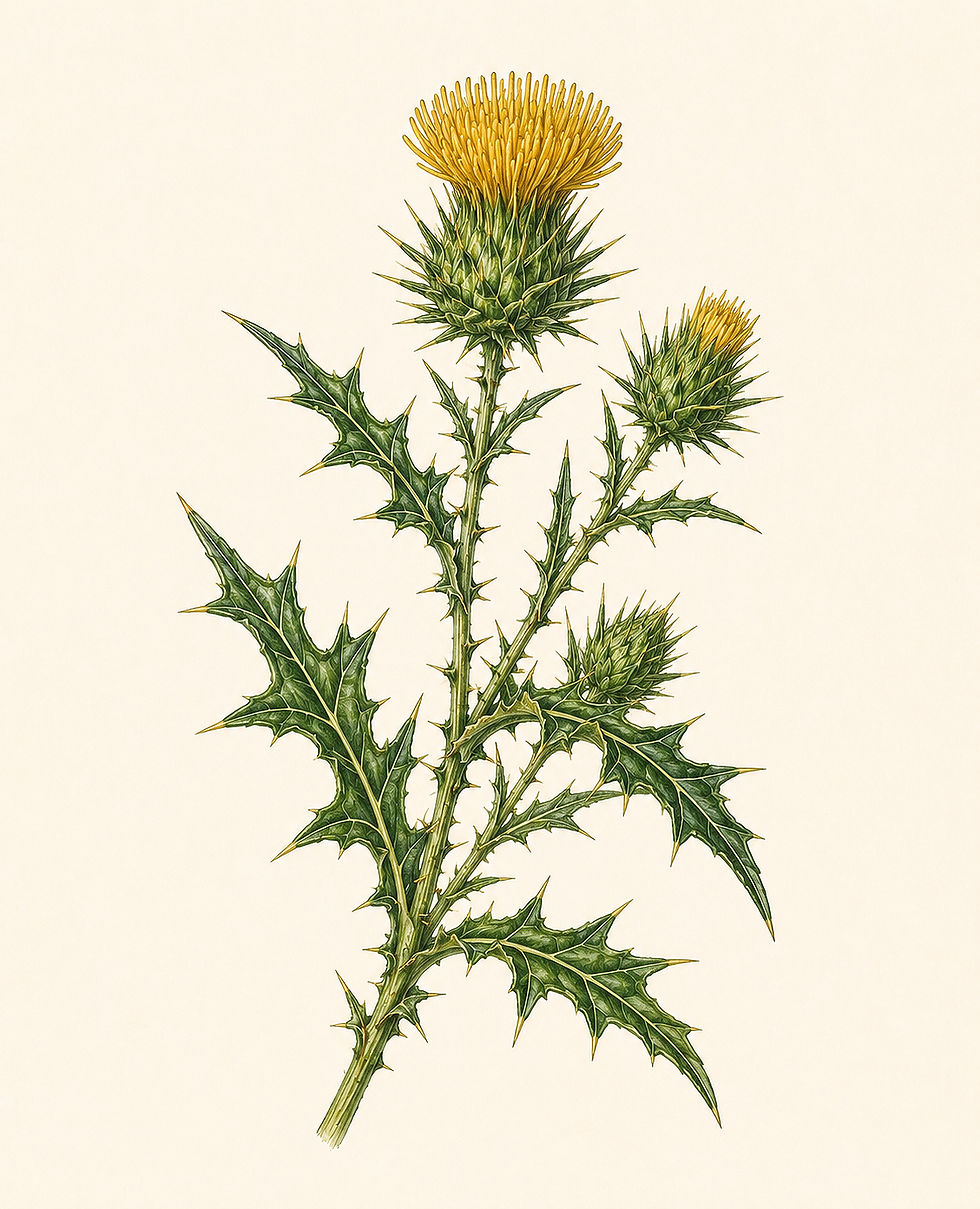
Blessed Thistle
Cnicus benedictus
Element: Fire
Threshold: A thorned guardian of correction and resilience, reminding us that what is bitter can also be deeply healing.
Keeper’s Note
Blessed Thistle is one of the old monastery herbs, valued for its strength and steadfast nature. Its spiny leaves and bright golden flowers speak of protection, endurance, and the quiet wisdom found in difficult things. Long gathered by herbalists, it has been cherished as a plant that encourages the body to awaken, strengthen, and return to balance.
Traditional Uses
Blessed Thistle has traditionally been used as a bitter tonic to support healthy digestion and stimulate the appetite. It has long been included in herbal preparations intended to encourage digestive function and general vitality, particularly during times of weakness or convalescence. In folk herbalism, it was also valued as a supportive herb for nursing mothers and as a general strengthening plant.
Where It Grows
Blessed Thistle is native to the Mediterranean region, where it grows in dry fields, open hillsides, and sunny, well-drained ground. Today it is cultivated in herb gardens around the world, thriving in full sun and poorer soils where many softer plants struggle.
How to Harvest
Harvest the aerial parts — the leaves, stems, and flowering tops — just as the plant begins to bloom. Wear gloves when gathering, as the spines can be sharp. Cut only what you need, leaving healthy plants to flower and set seed for the seasons ahead. The harvested herb may be used fresh or dried in a warm, airy place away from direct sunlight.
Gentle Safety Note
Blessed Thistle is generally used in small traditional amounts as a bitter herb. Those with allergies to plants in the daisy family (Asteraceae) should use caution, as sensitivity may occur. Avoid use during pregnancy unless guided by a qualified practitioner, and use care with medications or ongoing health conditions.

Blue Vervain
Verbena hastata
Element: Air + Water
Threshold: A quiet meadow spire that steadies the spirit and reminds us that gentleness can also be strength.
Keeper’s Note
Blue Vervain is a graceful wildflower, sending tall violet-blue blooms toward the summer sky while its roots remain firmly anchored in the earth below. Long associated with calm, balance, and sacred purpose, it has been cherished by herbalists and storytellers alike. It carries the feeling of soft persistence — encouraging us to release what weighs heavily and trust that stillness has its own quiet power.
Traditional Uses
Blue Vervain has traditionally been used to support relaxation and encourage a sense of calm during times of tension or overwhelm. It has long been prepared as a gentle herbal tea and was valued in folk practice for supporting healthy digestion and occasional muscular tightness. Historically, it was also regarded as a sacred herb, often included in protective and ceremonial traditions.
Where It Grows
Blue Vervain is native to North America and commonly grows in sunny meadows, damp fields, roadside ditches, stream banks, and the edges of wetlands. It prefers moist soil and often forms beautiful stands of slender purple flower spikes that bloom throughout the warmth of summer.
How to Harvest
Harvest the flowering tops and upper leaves just as the blossoms begin to fully open. Gather on a dry day after the morning dew has lifted, taking only what is needed and leaving plenty behind for pollinators and natural reseeding. The herb may be used fresh or dried in a cool, airy place away from direct sunlight.
Gentle Safety Note
Blue Vervain is generally considered a gentle traditional herb when used in moderate amounts. It is often avoided during pregnancy except under the guidance of a qualified practitioner because of its traditional association with the reproductive system. As with any herb, use caution with medications, ongoing health conditions, or known plant sensitivities.

Blue Cohosh
Caulophyllum thalictroides
Element: Earth + Fire
Threshold: A deep woodland root of initiation and ancient knowing, carried through life's great passages with patience and respect.
Keeper’s Note
Blue Cohosh is one of the old forest medicines, growing quietly beneath the shade of hardwood trees. Its delicate blue berries and graceful leaves conceal a strong and enduring root that has been valued by generations of herbalists. Closely tied to cycles of change and transition, it reminds us that some journeys ask for preparation, courage, and trust in the wisdom carried by the earth.
Traditional Uses
Blue Cohosh root has traditionally been used in North American herbalism to support the natural rhythms of the female reproductive system. It has long been associated with preparations intended for times of transition and has also been valued for occasional muscular tension and general discomfort. Historically, it was prepared carefully by experienced herbal practitioners and treated with great respect.
Where It Grows
Blue Cohosh is native to the rich deciduous forests of eastern North America. It thrives in shaded woodlands with moist, humus-rich soil, often growing beneath maple, beech, and oak trees where the forest floor remains cool and undisturbed.
How to Harvest
The root is traditionally harvested in the autumn after the berries have ripened and the plant begins to die back for the season. Because gathering the root ends the life of the plant, harvest only from abundant populations and never from protected areas. Cultivated sources are often the most sustainable and responsible choice.
Gentle Safety Note
Blue Cohosh is a strong traditional herb and should not be used casually. It is generally avoided during pregnancy except under the direct guidance of a qualified healthcare practitioner. Use caution with heart conditions, blood pressure concerns, medications, or ongoing health conditions, and consult a knowledgeable practitioner before internal use.

Boneset
Eupatorium perfoliatum
Element: Air + Water
Threshold: A marshland sentinel of endurance, offering warmth and resolve when the body feels weary and burdened.
Keeper’s Note
Boneset is one of the old North American healing herbs, growing quietly along the edges of streams and wetlands where the earth remains cool and moist. Its tall stems and delicate white flower clusters hide a deeply bitter nature that has long been respected by herbalists. It is a plant that speaks of perseverance — of resting when needed, gathering strength, and trusting that renewal often comes slowly.
Traditional Uses
Boneset has traditionally been prepared as a warming herbal tea during the cold and flu season, where it was valued for supporting the body's natural response to fever and occasional aches. It has also been used as a bitter herb to encourage healthy digestion and general recovery after periods of illness. Throughout North American folk herbalism, Boneset earned a reputation as one of the trusted companions for seasonal discomforts.
Where It Grows
Boneset is native to eastern and central North America, thriving in moist meadows, marshes, stream banks, roadside ditches, and the edges of wetlands. It prefers rich, damp soil and full to partial sun, often forming colonies of tall stems crowned with clusters of soft white blossoms in late summer.
How to Harvest
Harvest the flowering tops and upper leaves when the plant is in full bloom, choosing a dry day after the morning dew has lifted. Cut only the upper portion of healthy plants, leaving plenty behind for pollinators and for the stand to regenerate naturally. The herb may be used fresh or dried in a cool, well-ventilated place away from direct sunlight.
Gentle Safety Note
Boneset is a strong, bitter traditional herb and is generally used for short periods rather than as a daily tonic. Avoid use during pregnancy or nursing unless guided by a qualified practitioner. As with any herb, use caution with medications, allergies, or ongoing health conditions, and ensure proper identification before harvesting from the wild.
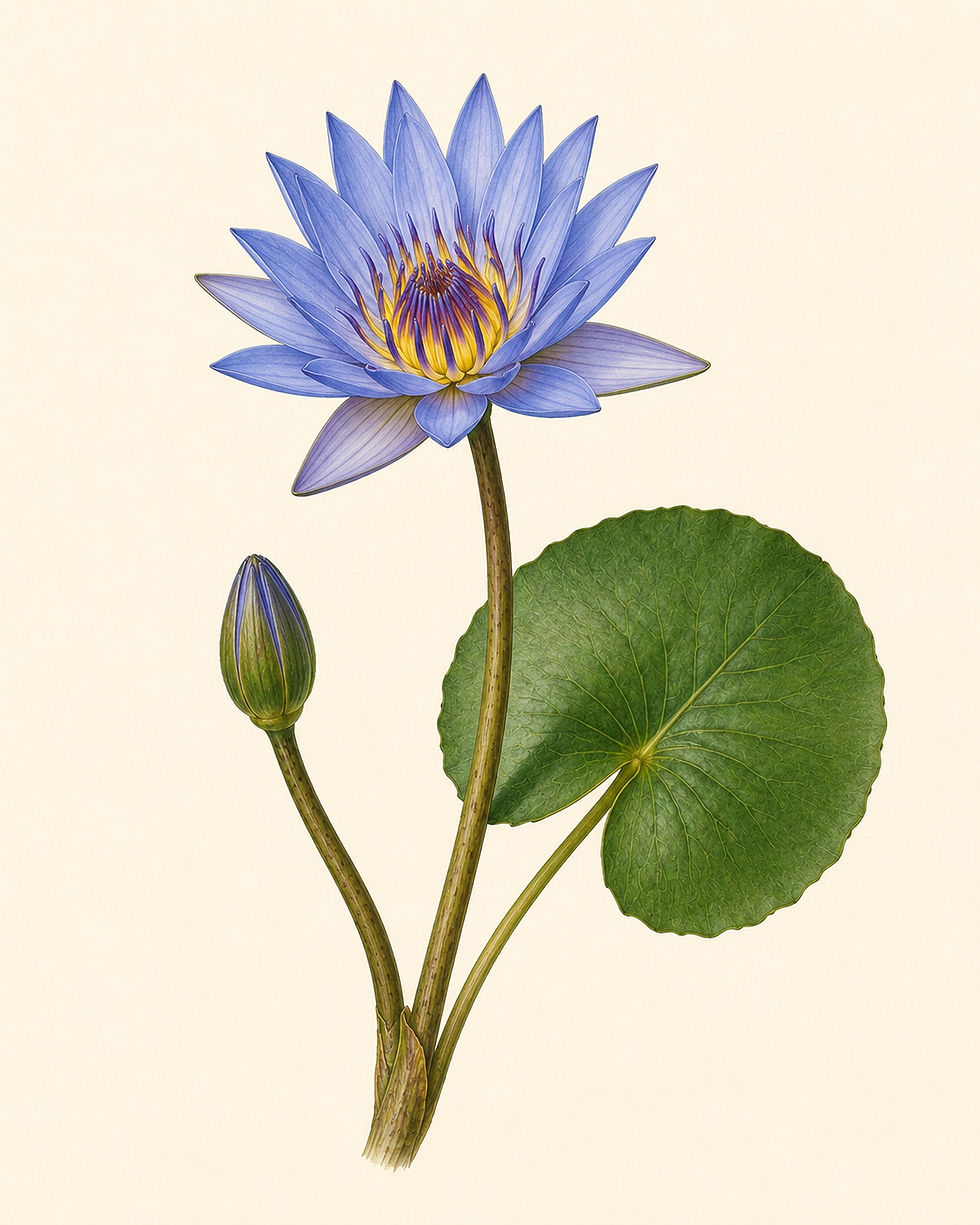
Blue Lotus
Nymphaea caerulea
Element: Air + Water
Threshold: A flower of still waters and quiet vision, opening where the heart and spirit meet.
Keeper’s Note
Blue Lotus has long been regarded as a plant of contemplation, beauty, and gentle awakening. Floating upon calm waters while rooted deep below, it carries an ancient symbolism of rising through darkness toward light. Revered for thousands of years, it invites moments of reflection and reminds us that peace is often found not by escaping the world, but by meeting it with quiet presence.
Traditional Uses
Blue Lotus flowers have traditionally been infused into teas, wines, and aromatic preparations intended to encourage relaxation and peaceful reflection. In ancient cultures, the blossoms were often associated with ceremony, meditation, and spiritual practice. Today, they are commonly enjoyed as a fragrant botanical for moments of stillness and personal ritual.
Where It Grows
Blue Lotus is native to the slow-moving waters, ponds, and marshes of northeastern Africa and parts of the Middle East. It thrives in warm, shallow water with abundant sunlight, its floating leaves and striking blue blossoms rising gracefully above the surface throughout the growing season.
How to Harvest
The flowers are traditionally gathered as they fully open, usually during the warmth of the day. Harvest carefully by cutting the bloom with a small portion of stem attached, taking only a few flowers from healthy populations. The blossoms may be used fresh or dried gently in a cool, shaded place to preserve their colour and fragrance.
Gentle Safety Note
Blue Lotus has a long history of traditional use, but modern research remains limited. Use caution with concentrated preparations, particularly if pregnant, nursing, taking medications, or managing ongoing health conditions. As with any botanical used for relaxation, avoid combining with alcohol or sedative substances unless guided by a qualified practitioner.

Borage
Borago officinalis
Element: Air + Water
Threshold: A star-flowered companion of courage and gladness, bringing lightness to heavy hearts and weary days.
Keeper’s Note
Borage is one of the old cottage garden herbs, easily recognized by its bright blue star-shaped flowers and softly bristled leaves. Long associated with courage, comfort, and cheerful spirits, it has been treasured as both a medicinal and culinary plant for centuries. There is a quiet generosity about Borage, offering its blossoms freely to pollinators while reminding us that joy often grows in simple places.
Traditional Uses
Borage has traditionally been used as a comforting herbal tea and fresh garden herb to support general well-being and uplift the spirit. The young leaves and beautiful blue flowers have long been added to salads, summer drinks, and herbal infusions. In folk tradition, Borage earned a reputation as a plant that encouraged courage and brought brightness during difficult times.
Where It Grows
Borage is native to the Mediterranean region but is now widely grown in gardens around the world. It thrives in full sun and well-drained soil, often happily reseeding itself from year to year. Its nectar-rich flowers make it a favourite among bees and other beneficial pollinators.
How to Harvest
Harvest the young leaves before the plant begins to flower for the mildest flavour, and gather the blossoms as they fully open throughout the summer. Pick on a dry day, taking only what you need and leaving plenty of flowers for the bees. The leaves are often enjoyed fresh, while the flowers may be used fresh or carefully dried.
Gentle Safety Note
Borage is generally enjoyed in small culinary amounts. Because some parts of the plant naturally contain pyrrolizidine alkaloids, large or prolonged internal use is not recommended unless using preparations specifically processed to remove these compounds. Use caution during pregnancy, nursing, with liver conditions, or while taking medications, and always use herbs thoughtfully.

Bugleweed
Lycopus virginicus
Element: Water + Air
Threshold: A quiet marsh herb of stillness and balance, teaching that gentle waters can steady even the busiest currents.
Keeper’s Note
Bugleweed is an unassuming plant, often overlooked among the damp meadows and stream banks where it naturally grows. Its modest white flowers and soft green leaves carry none of the boldness of showier herbs, yet it has long earned the respect of traditional herbalists. There is a quiet calming presence about Bugleweed, offering the reminder that strength is not always found in what stands tallest, but often in what remains steady.
Traditional Uses
Bugleweed has traditionally been used to support relaxation and encourage a sense of calm during times of nervous tension and restlessness. In North American folk herbalism, it has also been valued as a gentle herb for supporting the body's natural rhythms and overall balance. The aerial parts were commonly prepared as teas, tinctures, and simple herbal infusions.
Where It Grows
Bugleweed is native to much of North America and commonly grows in moist meadows, wet woodlands, marsh edges, stream banks, and low-lying fields. It prefers rich, damp soil and partial to full sunlight, often forming quiet colonies in places where the ground remains consistently moist.
How to Harvest
Harvest the upper flowering stems and leaves during the summer while the plant is in bloom. Gather on a dry day after the morning dew has lifted, taking only what is needed and leaving healthy stands to continue spreading naturally. The herb may be used fresh or dried in a cool, airy place away from direct sunlight.
Gentle Safety Note
Bugleweed is a traditional herb with specific historical uses and is best approached thoughtfully. It is generally avoided during pregnancy and nursing except under the guidance of a qualified practitioner. Use caution with thyroid conditions, medications, or ongoing health concerns, and always ensure proper identification before harvesting from the wild.

Butternut
Juglans cinerea
Element: Air + Earth
Threshold: A woodland elder of nourishment and release, reminding us that clearing away what is stagnant creates room for new growth..
Keeper’s Note
Butternut is a graceful native tree of eastern North America, known for its deeply furrowed bark, compound leaves, and rich, oily nuts. Long valued by both Indigenous peoples and early settlers, it offered food, medicine, and useful wood. There is a generous quality to Butternut — a tree that gives freely while standing quietly at the edges of forests and fields.
Traditional Uses
Butternut bark has traditionally been used in folk herbalism as a cleansing and supportive herb for digestive wellness. The nutritious nuts have long been gathered as a valuable food source, rich in oils and flavour. Historically, the tree was also appreciated for its wood, natural dyes, and practical uses throughout daily life.
Where It Grows
Butternut is native to eastern North America and grows in mixed hardwood forests, woodland edges, river valleys, and open slopes. It prefers rich, well-drained soils and plenty of sunlight, often reaching impressive sizes when given room to mature.
How to Harvest
The nuts are typically harvested in autumn once they begin falling naturally from the tree. Gather from the ground, remove the outer husks, and cure in a dry, well-ventilated place before storage. Bark harvesting should be approached with great care, as removing bark can damage or kill the tree. Whenever possible, source Butternut materials responsibly from cultivated or sustainably managed populations.
Gentle Safety Note
Butternut has a long history of traditional use, but internal preparations should be approached thoughtfully and in appropriate amounts. Those with tree nut allergies should avoid the nuts. As with any herb, use caution during pregnancy, nursing, while taking medications, or when managing ongoing health conditions. Proper identification is important, as several walnut relatives can appear similar.

Burdock Root
Arctium lappa
Element: Earth + Water
Threshold: A deep-reaching root of cleansing and grounding, teaching that true renewal often begins beneath the surface.
Keeper’s Note
Burdock is a patient companion of roadsides, meadows, and forgotten corners, sending its roots deep into the earth while its burrs travel wherever passing creatures may carry them. Long valued by herbalists around the world, it is a plant of nourishment, resilience, and steady restoration. There is a quiet honesty about Burdock, reminding us that lasting strength is often built slowly, one season at a time.
Traditional Uses
Burdock root has traditionally been used as a nourishing food and herbal tonic to support the body's natural cleansing processes. It has long been prepared in teas, decoctions, broths, and traditional foods, where it was valued for supporting healthy digestion and overall vitality. In folk herbalism, Burdock became known as one of the classic alterative herbs, often included in seasonal cleansing formulas.
Where It Grows
Burdock is native to Europe and Asia but has become naturalized throughout much of North America. It grows readily along roadsides, field edges, woodland margins, disturbed ground, and open meadows, thriving in rich, well-drained soils with full to partial sun. Its large leaves and distinctive hooked burrs make it easy to recognize by late summer.
How to Harvest
The root is best harvested from first-year plants in autumn, before the flowering stalk develops and while the energy remains concentrated below ground. Dig carefully, as the taproot grows long and deep. Wash thoroughly and use fresh, or slice and dry for future teas and decoctions. Leave plenty of plants behind to flower and provide food and habitat for wildlife.
Gentle Safety Note
Burdock root is generally considered a gentle and nourishing herb when used in traditional amounts. As with any wild plant, proper identification is important, as young plants can sometimes be confused with other large-leaved species. Use caution with allergies to the daisy family (Asteraceae), medications, pregnancy, nursing, or ongoing health conditions, and harvest only from clean areas free of roadside contaminants or chemical sprays..
