

A — The First Shelf
The herbs gathered beneath the letter A speak of beginnings, adaptability, and quiet support.
Here we meet plants that soothe, strengthen, protect, and restore — from ancient resins and nourishing roots to fragrant garden herbs and wild woodland allies. Some offer comfort, some encourage resilience, and others remind us that healing often begins with the smallest of steps.
As with all entries within the Keeper's Shelf, these plants are offered as an invitation to learn their stories, honour their traditions, and deepen your relationship with the living wisdom they carry.
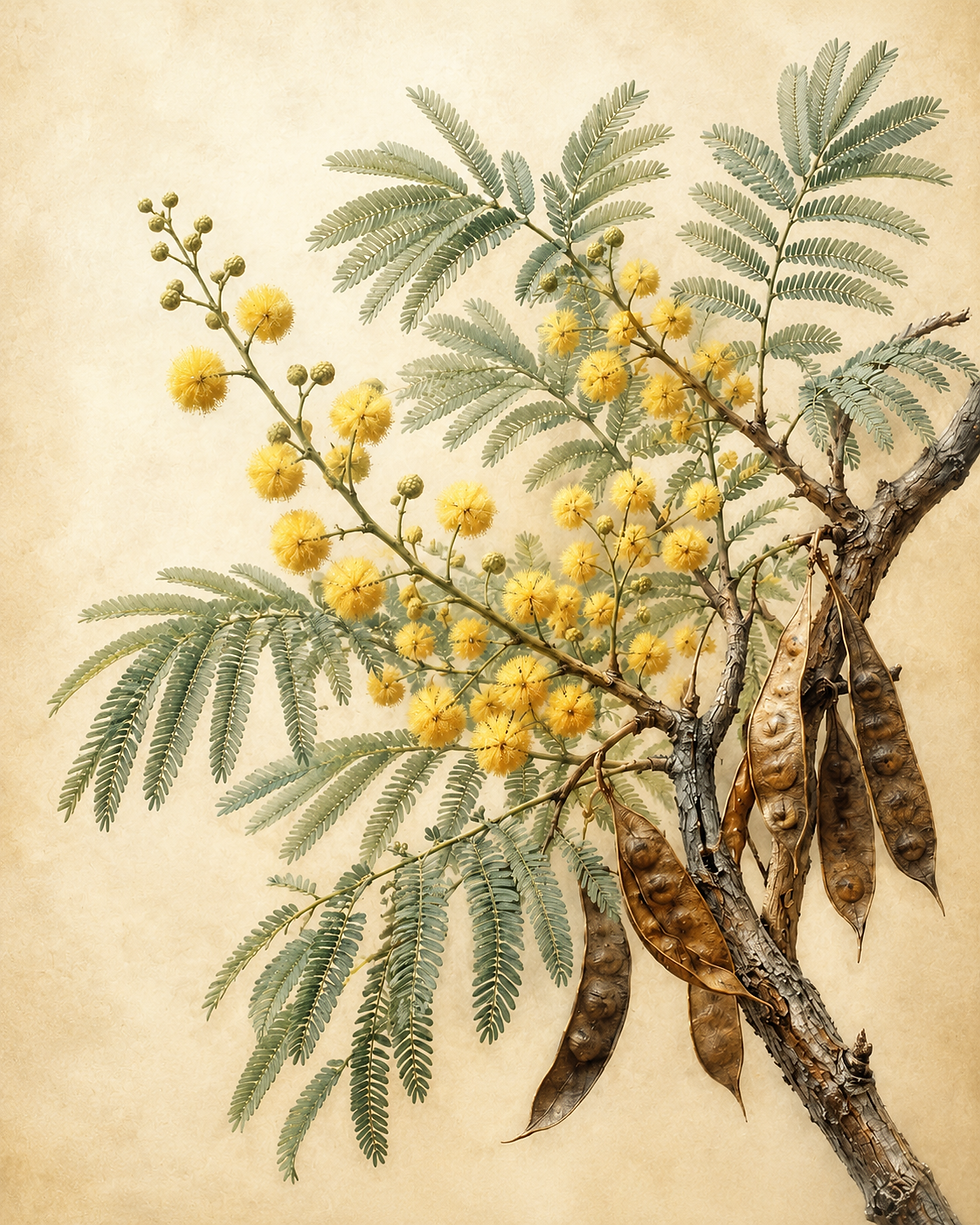
Acacia
Acacie Senegal (Commonly Gum Aribica)
Element: Air + Earth
Threshold: A golden tree of softening and shelter, offering its quiet medicine where dryness asks to be held.
Keeper’s Note
Acacia is a tree of softness and quiet strength, known for its feathery leaves, golden blossoms, and soothing gum. In the old apothecary, acacia gum was valued as a gentle binder and protector — used to bring body to syrups, lozenges, and preparations meant to comfort dry, irritated tissues. It is a plant of holding: softening what feels rough, and lending steadiness where something needs to come together.
Traditional Uses
Acacia gum, also known as gum arabic, has traditionally been used as a demulcent, thickener, stabilizer, and binder. It is often found in throat lozenges, syrups, herbal pastilles, confections, and preparations for the mouth, throat, and digestive tract.
Where It Grows
Acacia species grow in warm, dry, and subtropical regions around the world, especially in parts of Africa, Australia, the Middle East, and Asia. Many species are well adapted to dry soils, open landscapes, and harsh sun.
How to Harvest
Acacia gum is collected from the bark, where the tree releases hardened resin-like tears from natural cracks or careful cuts. These amber-gold pieces are then dried and cleaned for use. For home herbal work, it is best to purchase properly identified, food-grade acacia gum rather than harvesting from unknown trees, as acacia species vary widely.
Gentle Safety Note
Use only properly identified, food-grade acacia gum for internal preparations. Avoid using unidentified bark, pods, leaves, or flowers unless you are working from a trusted species-specific source. Large amounts may cause digestive upset in sensitive people.

Aloe
Aloe Vera
Element: Water + Earth
Threshold: A cooling balm at the doorway of heat and irritation, offering moisture, tenderness, and quiet relief.
Keeper’s Note
Aloe is the cool hand of the apothecary — a plant of moisture, tenderness, and relief. With its thick green leaves and soothing inner gel, Aloe has long been kept close in kitchens, gardens, and sunny windowsills for life’s small burns, scrapes, and overheated places. It is a plant of cooling restoration, offering softness where the skin feels angry, dry, or inflamed.
Traditional Uses
Aloe gel has traditionally been used topically to soothe minor burns, sunburns, dry skin, mild irritation, and small superficial wounds. The clear inner gel is cooling and moistening, often used in simple skin preparations, after-sun care, and gentle homemade remedies for irritated skin.
Aloe has also been used in some traditional systems for digestive purposes, but the inner gel and the yellow latex beneath the leaf skin are very different substances. For the Keeper’s Shelf, Aloe is best introduced as a topical skin ally.
Where It Grows
Aloe grows naturally in warm, dry climates and is commonly cultivated around the world as a houseplant and medicinal garden plant. It prefers bright light, well-drained sandy soil, and does not like to sit in wet roots. Its thick, fleshy leaves grow in a rosette and store moisture, helping the plant survive dry conditions.
How to Harvest
Harvest a mature outer leaf by cutting it close to the base of the plant with a clean knife. Let the cut leaf rest upright for several minutes so the yellow latex can drain away. Slice away the green outer skin and scoop out the clear inner gel.
Use the fresh gel right away, or store it in a clean container in the refrigerator for a short time. Always discard gel that changes smell, colour, or texture.
Gentle Safety Note
Use Aloe gel externally on minor skin irritation only. Do not apply to deep wounds, serious burns, infected skin, or severe rashes. Avoid the yellow latex inside the leaf, as it can be irritating and strongly laxative if taken internally. Use caution with allergies, pregnancy, nursing, medications, or chronic health conditions. Always patch test before using Aloe on larger areas of skin.
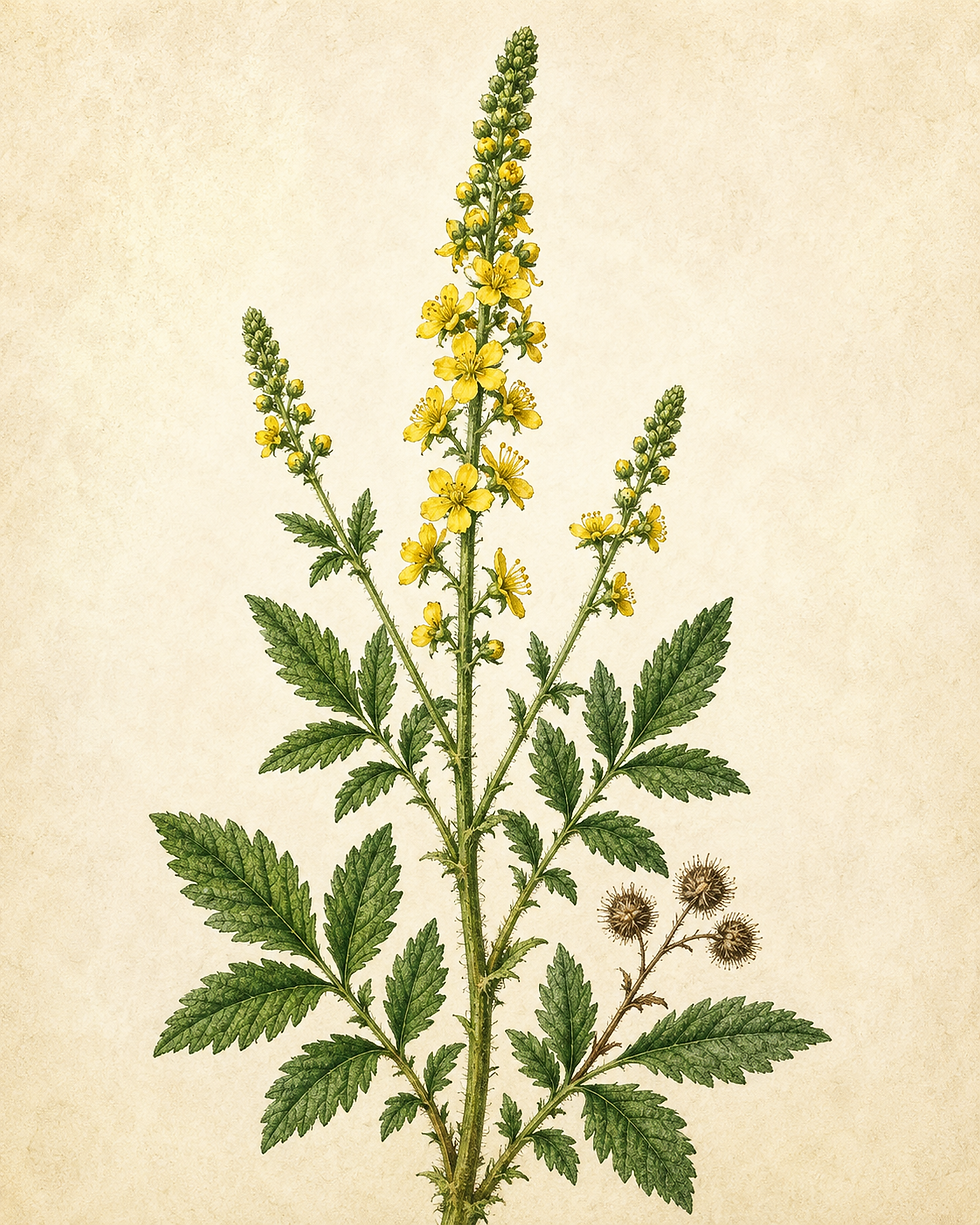
Agrimony
Agrimonia Eupatoria
Element: Air + Earth
Threshold: A bright yellow keeper of quiet truths, gathering what has scattered and gently drawing the body back together.
Keeper’s Note
Agrimony is a golden little truth-teller — a plant of quiet strength, bright flowers, and old country wisdom. It has long been gathered where fields meet hedgerows, offering its medicine to the throat, the belly, and the skin. Though delicate in appearance, Agrimony carries a firming, toning nature — the kind of plant that helps bring things back together when the body feels loose, irritated, or unsettled.
Traditional Uses
Agrimony has traditionally been used as an astringent herb, largely because of its tannin content. It has been used in folk and traditional herbal medicine for mild digestive upset, loose stools, inflammation of the mouth and throat, and minor skin irritation or small superficial wounds.
It has also been used as a gentle tea herb and gargle, especially where tissues feel tender, boggy, or irritated.
Where It Grows
Agrimony is a perennial herb with deeply veined, pinnate leaves and slender spikes of small yellow, five-petalled flowers that usually bloom from June to August.
It is native to parts of Europe and southwestern Asia and is often found in meadows, grasslands, hedgerows, field edges, open woodlands, and sunny waysides. It prefers well-drained soil and open light, often appearing along the edges of cultivated and wild places.
How to Harvest
Harvest the upper flowering tops when the plant is in bloom and the yellow flowers are fresh and vibrant. Choose a dry day after the morning dew has lifted. Cut the upper portion of the plant rather than pulling it up by the root, and always leave plenty behind for pollinators and reseeding.
Bundle loosely and hang upside down in a warm, airy place away from direct sunlight. Once fully dry, strip the leaves and flowering tops from the tougher stems and store in a clean, clearly labelled jar.
Gentle Safety Note
Agrimony is rich in tannins, so large amounts or long-term heavy use may irritate the stomach or be too drying for some people. Use caution if pregnant, breastfeeding, taking medications, managing a medical condition, or if you are sensitive to plants in the rose family. Avoid using wild-harvested plants unless you are completely confident in identification and have gathered from a clean, unsprayed area.

Amaranth
Amaranthus species
Element: Earth + Fire
Threshold: A plant of abundance and endurance, offering nourishment from leaf to seed and reminding us what can thrive after hardship.
Keeper’s Note
Amaranth is a plant of abundance — bold, nourishing, and beautifully persistent. With its rich seed heads, tender greens, and deep colours, it has long stood as a food of resilience and vitality. In the Keeper’s Shelf, Amaranth belongs with the plants that feed both body and spirit: rooted in the earth, warmed by the sun, and generous enough to offer leaf, seed, and beauty.
Traditional Uses
Amaranth has traditionally been used as both a leafy green and a grain-like seed. The young leaves are eaten much like spinach and have been used as a nourishing green in soups, stews, sautés, and simple food preparations. The seeds are also eaten as a food, often cooked like a grain or ground into flour.
Amaranth is valued more as a nutritive food plant than a classic medicinal herb, offering minerals, fibre, and plant-based nourishment. Both the leaves and seeds are edible in many species, though proper identification matters.
Where It Grows
Amaranth grows in warm, sunny places and is often found in gardens, cultivated fields, disturbed soil, roadsides, and open areas. It thrives in full sun and well-drained soil, and many varieties grow tall with colourful plumes or seed heads. Some are grown for ornamental beauty, some for greens, and some for seed.
How to Harvest
Harvest young leaves when they are tender and vibrant, usually before the plant becomes too tough or heavily seeded. Cut leaves or upper stems with clean scissors, leaving the plant rooted so it can continue growing.
For seed harvest, wait until the flower heads mature and begin to dry. Cut the seed heads, hang or lay them in a dry, airy place, then gently rub or shake out the tiny seeds once fully dry. Winnow away the chaff before storing in a clean jar.
Gentle Safety Note
Use only properly identified edible amaranth species, and harvest from clean, unsprayed areas. Amaranth leaves can contain oxalates and may also accumulate nitrates depending on growing conditions, so moderation is wise, especially for those prone to kidney stones or on restricted diets. Cooking the greens is often gentler than eating large amounts raw.
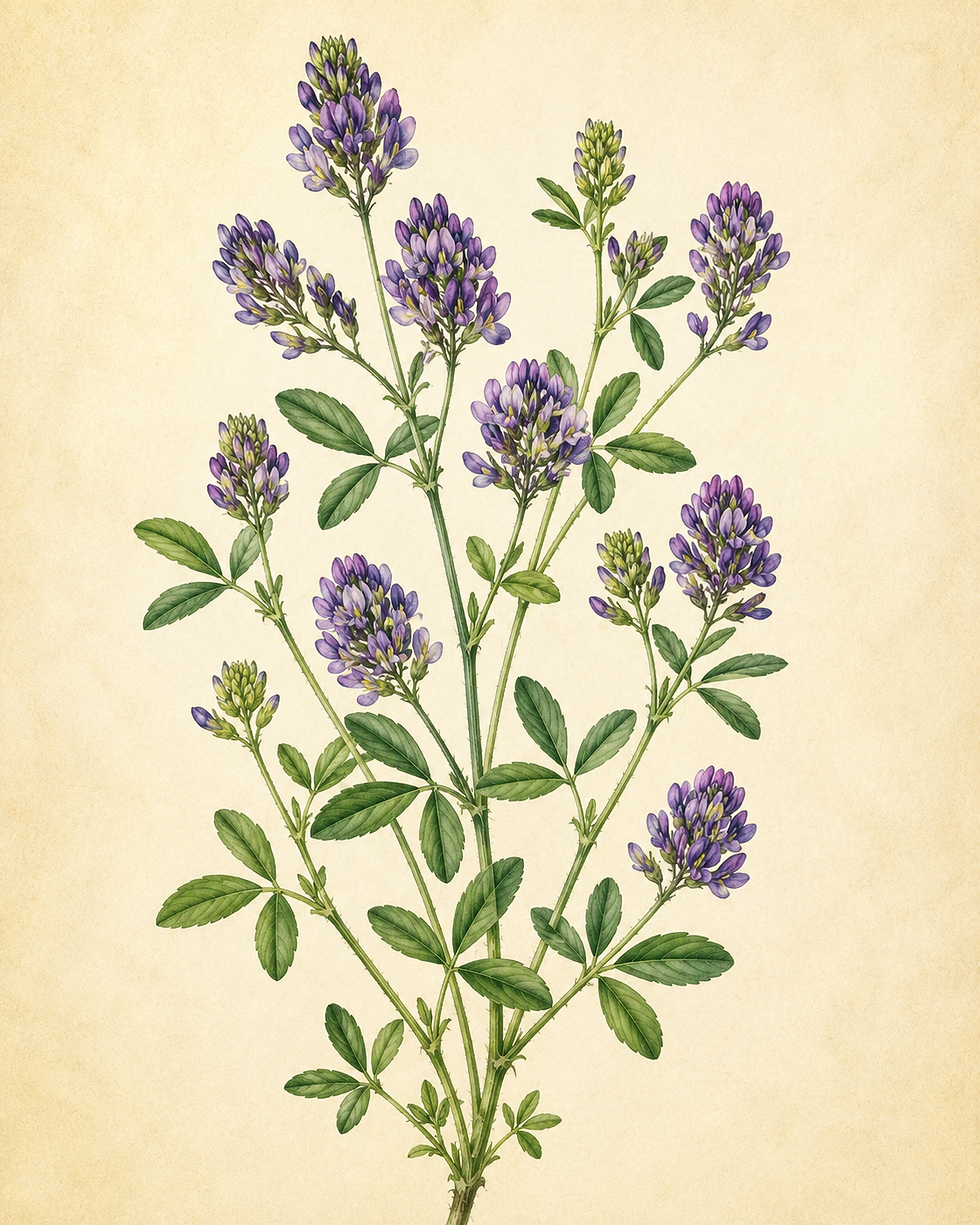
Alfalfa
Medicago Sativa
Element: Earth
Threshold: A deep-rooted green nourisher, drawing strength from the hidden places of the earth and offering it back as steady renewal.
Keeper’s Note
Alfalfa is a deep-rooted nourisher — a green field plant that draws strength from far below the surface. Often called a humble farm herb, it carries the feeling of steady replenishment: mineral-rich, grounding, and full of quiet vitality. In the Keeper’s Shelf, Alfalfa belongs with the plants that help restore what has been drained, offering gentle nourishment rather than force.
Traditional Uses
Alfalfa has traditionally been used as a nutritive tonic and mineral-rich herb. The dried leaf is often prepared as tea, added to nourishing herbal blends, or ground into powder for use in smoothies, capsules, or mineral-rich green mixes. It has been valued for general nourishment, vitality, and support during times when the body feels depleted or in need of rebuilding.
Where It Grows
Alfalfa grows in fields, meadows, pastures, roadsides, and cultivated garden spaces. It prefers full sun, well-drained soil, and open growing areas. It is widely grown as a forage crop and is known for its purple to bluish-purple flower clusters and small three-part leaves.
How to Harvest
Harvest the aerial parts when the plant is young, green, and vibrant — ideally just before or as the first flowers begin to open. Cut the upper portion of the plant rather than pulling it up by the roots. Dry in a warm, airy place away from direct sunlight, then store the dried leaf and flowering tops in a clean, clearly labelled jar.
Gentle Safety Note
Alfalfa is generally considered a nutritive herb, but it may not be suitable for everyone. Use caution if you take blood-thinning medication, have an autoimmune condition, are pregnant or nursing, or are using hormone-sensitive medications. Avoid consuming large amounts of alfalfa seed or sprouts unless they are safely grown and handled, as sprouts can carry food-safety risks

Amla
Phllanthus emblica
Element: Air
Threshold: The old tree that remembers how to mend itself.
Keeper’s Note
Amla is one of the oldest healing fruits known to humankind. Revered in Ayurveda as a fruit of renewal and longevity, it reminds us that resilience is often quiet work — small repairs made day after day, beneath the surface, where no one can see.
Traditional Uses
For thousands of years, amla has held a place of honor in traditional Ayurvedic practice, where it is regarded as a deeply restorative fruit for the whole body. It has long been used to support healthy digestion, nourish the tissues, promote vitality, and encourage graceful aging. Often included in daily tonics and the famous herbal blend Triphala, amla is valued not for dramatic intervention, but for its quiet, steady ability to help the body maintain balance over time.
Where It Grows
Amla is native to the Indian subcontinent, where it grows on hardy deciduous trees that thrive in warm, subtropical climates. The trees can often be found along hillsides, forest edges, village groves, and cultivated orchards, producing their small pale green-yellow fruits in autumn. Deeply woven into the landscapes and healing traditions of India, the amla tree has been tended for generations as both a source of nourishment and a symbol of enduring vitality.
How to Harvest
Amla fruits are traditionally harvested in autumn once they have reached their full size and developed their characteristic pale green-yellow colour. They are gently hand-picked from the tree or gathered soon after naturally falling to avoid bruising. Fresh fruits may be used immediately, while others are sliced and dried, preserved, or ground into powder for use throughout the year. As with all keeper's harvests, gather with care, leaving plenty behind to nourish the land, the wildlife, and the generations of trees still to come.
Gentle Safety Note
Amla is generally considered a well-tolerated food and traditional herb when used in ordinary amounts. Because it may influence blood sugar, blood pressure, and the way the blood clots, those taking medication for diabetes, hypertension, or blood thinning should speak with a healthcare provider before using it regularly. Use extra care during pregnancy, while breastfeeding, before surgery, or when combining amla with other herbs or supplements that affect circulation or blood sugar.

Angelica
Angelica Archangelica
Element: Fire + Air
Threshold: A guardian at the garden gate, warming the body, clearing heaviness, and standing watch over the threshold between weakness and strength.
Keeper’s Note
Angelica is an old guardian herb — tall, aromatic, and luminous, with great umbrella-like blooms that seem to hold a little light at their edges. Long associated with protection, warmth, and the clearing of heaviness, Angelica carries a bold, almost sacred presence in the garden. In the Keeper’s Shelf, it belongs with the warming plants that awaken digestion, stir stagnant places, and remind the body of its inner flame.
Traditional Uses
Angelica root, seed, and leaf have traditionally been used as aromatic bitter herbs, especially for digestion. Angelica has been used to help support appetite, ease gas and bloating, warm the stomach, and bring comfort where digestion feels cold, heavy, or sluggish. Health Canada lists Angelica as traditionally used in herbal medicine to aid digestion, help relieve flatulent dyspepsia, and support coughs and colds.
It has also been used in old culinary traditions, especially in candied stems, bitters, liqueurs, and warming herbal preparations.
Where It Grows
Angelica grows best in rich, moist soil with full sun to partial shade. It is a tall biennial herb, meaning it usually grows leafy in its first year, flowers and sets seed in its second year, then dies back after seeding.
It is often found near damp meadows, stream edges, woodland borders, and cool garden places where the soil stays moist but not waterlogged. Its large divided leaves, thick hollow stems, and pale greenish-white flower umbels give it a strong, architectural presence.
How to Harvest
Harvest young leaves and tender stems carefully in the first year, taking only what you need so the plant can keep growing. The root is traditionally harvested in the fall of the first year or early spring of the second year, before the plant sends up its full flowering stalk. Seeds can be gathered once the flower heads mature and begin to dry.
Because Angelica belongs to the carrot family, proper identification is extremely important. Never harvest wild Angelica unless you are absolutely certain of the plant, as this family contains dangerous look-alikes.
Gentle Safety Note
Angelica may increase sensitivity to sunlight in some people because it contains furanocoumarins, compounds associated with phototoxic reactions. Use caution with sun exposure when handling or using Angelica preparations.
Avoid during pregnancy unless guided by a qualified practitioner. Use caution if nursing, taking medications, using blood thinners, managing a medical condition, or if you are sensitive to plants in the carrot family. Never ingest wild-harvested Angelica unless identification is certain, as poisonous look-alikes can be deadly.

Arnica
Arnica montana
Element: Earth + Fire
Threshold: A mountain-born ally for tender places, meeting bruising, strain, and shock with its fierce little gift of repair.
Keeper’s Note
Arnica is the herb reached for when the body has been knocked, overworked, or overdone. It is not a daily comfort herb, but a “something happened” herb — the kind kept close for bumps, bruises, sore muscles, and tender places after strain. In the Keeper’s Shelf, Arnica belongs with the first-aid plants: strong, respected, and used with care.
Traditional Uses
Arnica has traditionally been used externally in herbal medicine to help relieve pain and inflammation in muscles and joints. It is commonly prepared as infused oil, salve, cream, gel, liniment, or compress for bruises, sprains, strains, sore muscles, and general aches from overexertion. Health Canada lists Arnica montana as traditionally used in herbal medicine for helping relieve pain and inflammation in muscles and joints.
Where It Grows
Arnica montana is native to parts of Europe and is associated with mountain meadows, open slopes, and acidic, well-drained soils. Because wild populations can be vulnerable in some regions, many herbalists prefer cultivated Arnica or responsibly sourced prepared products rather than wild-harvesting.
How to Harvest
Arnica flowers are harvested when fully open and vibrant, usually on a dry day after dew has lifted. The flower heads are gently picked or cut, then used fresh for infused oil or dried carefully in a warm, airy place away from direct sunlight.
For most home herbal work, cultivated Arnica or dried Arnica flowers are the better choice. Avoid harvesting from wild populations unless you know the plant is abundant, legally harvestable, and ethically gathered.
Gentle Safety Note
Arnica is for external use only and should not be swallowed. Do not apply it to broken skin, open wounds, eyes, or mucous membranes. Stop using it if irritation or rash develops. Poison Control cautions against use on broken skin and notes possible allergic reactions, especially for people sensitive to Asteraceae/Compositae plants such as ragweed, chamomile, chrysanthemum, dandelion, marigold, or sunflower.
Astragulus
Astragalus membranaceus
Element: Earth
Threshold:
Keeper’s Note
Angelica is an old guardian herb — tall, aromatic, and luminous, with great umbrella-like blooms that seem to hold a little light at their edges. Long associated with protection, warmth, and the clearing of heaviness, Angelica carries a bold, almost sacred presence in the garden. In the Keeper’s Shelf, it belongs with the warming plants that awaken digestion, stir stagnant places, and remind the body of its inner flame.
Traditional Uses
Angelica root, seed, and leaf have traditionally been used as aromatic bitter herbs, especially for digestion. Angelica has been used to help support appetite, ease gas and bloating, warm the stomach, and bring comfort where digestion feels cold, heavy, or sluggish. Angelica as traditionally used in herbal medicine to aid digestion, help relieve flatulent dyspepsia, and support coughs and colds.
It has also been used in old culinary traditions, especially in candied stems, bitters, liqueurs, and warming herbal preparations.
Where It Grows
Angelica grows best in rich, moist soil with full sun to partial shade. It is a tall biennial herb, meaning it usually grows leafy in its first year, flowers and sets seed in its second year, then dies back after seeding.
It is often found near damp meadows, stream edges, woodland borders, and cool garden places where the soil stays moist but not waterlogged. Its large divided leaves, thick hollow stems, and pale greenish-white flower umbels give it a strong, architectural presence.
How to Harvest
Harvest young leaves and tender stems carefully in the first year, taking only what you need so the plant can keep growing. The root is traditionally harvested in the fall of the first year or early spring of the second year, before the plant sends up its full flowering stalk. Seeds can be gathered once the flower heads mature and begin to dry.
Because Angelica belongs to the carrot family, proper identification is extremely important. Never harvest wild Angelica unless you are absolutely certain of the plant, as this family contains dangerous look-alikes.
Gentle Safety Note
Angelica may increase sensitivity to sunlight in some people because it contains furanocoumarins, compounds associated with phototoxic reactions. Use caution with sun exposure when handling or using Angelica preparations.
Avoid during pregnancy unless guided by a qualified practitioner. Use caution if nursing, taking medications, using blood thinners, managing a medical condition, or if you are sensitive to plants in the carrot family. Never ingest wild-harvested Angelica unless identification is certain, as poisonous look-alikes can be deadly.

Anise
Pimpinella anisum
Element: Air + Fire
Threshold: A small seed of warmth and sweetness, carried into the belly like a little kitchen lantern.
Keeper’s Note
Anise is a sweet, aromatic little herb with a bright spirit and a warming touch. Its delicate umbels and licorice-scented seeds have long made it a favourite in kitchens, apothecaries, and old household remedies. In the Keeper’s Shelf, Anise belongs with the comforting herbs — the ones that warm the belly, sweeten the breath, and bring a sense of ease after heaviness.
Traditional Uses
Anise seed has traditionally been used as a digestive herb, especially after meals. It has been used to help ease gas, bloating, and mild stomach discomfort, and has often been found in teas, syrups, candies, liqueurs, and culinary spice blends.
It has also been used traditionally to freshen breath and to bring a gentle aromatic warmth to cold-weather preparations.
Where It Grows
Anise is a flowering annual herb that prefers warm weather, full sun, and well-drained soil. It grows with fine, feathery upper leaves and small white flower umbels that later form the fragrant seeds. It is commonly cultivated in herb gardens and warmer growing regions.
How to Harvest
Harvest anise seeds once the flower heads have faded and the seed heads begin to dry and turn grey-green to brown. Cut the umbels carefully and place them upside down in a paper bag or on a clean cloth in a dry, airy place.
Once fully dry, gently rub or shake the seed heads to release the seeds. Store the dried seeds in a clean, clearly labelled jar away from heat, light, and moisture.
Gentle Safety Note
Anise is generally used in small culinary or tea amounts, but concentrated preparations should be used with care. Avoid if you are allergic to plants in the carrot family, such as fennel, celery, coriander, dill, or parsley. Use caution during pregnancy, nursing, with hormone-sensitive conditions, or when taking medications. Always use properly identified anise seed, as it should not be confused with star anise or other unrelated plants.

Artichoke Leaf
Cynara scolymus
Element: Earth + Water
Threshold: The thorned guardian that teaches the body to let go.
Keeper’s Note
Artichoke leaf reminds us that sometimes healing begins with release. Beneath its protective spines lies a medicine long valued for encouraging movement—of digestion, of stagnation, and of the burdens the body quietly carries. It is a herb of clearing pathways and making room for renewal.
Traditional Uses
Artichoke leaf has traditionally been used to support healthy liver function, digestion, and the natural flow of bile. Herbalists have long turned to artichoke leaf after rich meals or periods of overindulgence, valuing its gentle bitter qualities and its ability to support the body's natural cleansing processes.
Where It Grows
Artichoke is native to the Mediterranean region, where it thrives in warm, sunny climates with well-drained soils. Today it is widely cultivated throughout Europe, North America, and many temperate regions for both culinary and herbal use.
How to Harvest
The medicinal leaves are typically harvested before the flower buds fully mature, when their bitter constituents are most concentrated. The leaves are gathered by hand and are commonly dried for later use in teas, tinctures, and other herbal preparations.
Gentle Safety Note
Artichoke leaf is generally considered a well-tolerated traditional herb. Because it may stimulate bile flow, individuals with gallstones, bile duct obstruction, or allergies to plants in the Asteraceae family should consult a healthcare provider before regular use

Avens
Geum urbanum
Element: Earth + Fire
Threshold: A humble hedgerow keeper, drawing strength from root and earth to steady the belly, tone tender tissues, and bring quiet order where things feel unsettled.
Keeper’s Note
Avens is a humble hedgerow keeper — a quiet plant of root, warmth, and old woodland wisdom. Often found along shaded paths and field edges, it carries a gentle clove-like scent in its root and a steadying presence in the apothecary. Avens is a plant of gathering and toning, offering support where things feel loose, tender, unsettled, or in need of quiet order.
Traditional Uses
Avens has traditionally been used as an astringent and aromatic herb, especially for the mouth, throat, digestion, and tender tissues. Its root contains tannins, which give it a firming quality, and a warm, clove-like aroma that has made it useful in old household and herbal preparations.
It has been used in teas, rinses, gargles, and simple infusions for mild digestive upset, loose stools, sore throats, irritated gums, and minor mouth discomfort. In traditional herbalism, Avens is often seen as a plant that helps tone and tighten tissues while offering a little warmth to the belly.
Where It Grows
Avens grows in woodlands, hedgerows, shaded paths, field edges, and disturbed ground. It prefers partial shade and rich, well-drained soil, often appearing where wild spaces meet cultivated ones. The plant has yellow five-petalled flowers, burr-like seed heads, and deeply divided leaves. Its root has a noticeable clove-like scent when freshly dug.
How to Harvest
Harvest the aerial parts when the plant is flowering, choosing clean, unsprayed areas away from roadsides or contaminated soil. Cut the upper portions of the plant with scissors and dry in a warm, airy place away from direct sunlight.
The root is usually harvested in spring or fall, when the plant’s energy is lower in the leaves and closer to the ground. Dig carefully, taking only what you need and leaving plenty of plants behind. Wash the root gently, slice if needed, and dry thoroughly before storing in a clean, labelled jar.
Gentle Safety Note
Avens is rich in tannins, so large amounts or long-term use may be too drying or irritating for sensitive digestion. Use caution if you are pregnant, nursing, taking medications, managing a medical condition, or prone to constipation or dryness. Always confirm proper identification before harvesting, and gather only from clean, unsprayed areas.

Anise Hyssop
Agastache foeniculum
Element: Air + Fire
Threshold: A sweet-breathed garden ally, opening the senses, softening the belly, and inviting the spirit to settle
Keeper’s Note
Anise Hyssop is a sweet-breathed garden herb, carrying the scent of licorice, mint, and summer sun. Its purple flower spikes are beloved by bees and pollinators, while its leaves offer a gentle, aromatic comfort to the senses. In the Keeper’s Shelf, Anise Hyssop belongs with the soft uplifting herbs — the ones that open the breath, settle the belly, and bring a quiet brightness to the spirit.
Traditional Uses
Anise Hyssop has traditionally been used as a gentle aromatic herb for tea, especially for digestion, mild stomach discomfort, and soothing the throat. Its sweet, licorice-like flavour makes it a lovely addition to herbal tea blends, syrups, infused honey, and culinary preparations.
It has also been used as a calming, pleasant herb for moments of tension or heaviness, offering a soft lift without feeling forceful.
Where It Grows
Anise Hyssop grows well in sunny gardens, meadows, prairie edges, and well-drained soil. It is native to parts of North America and is often grown as both a medicinal and pollinator plant. The plant has square stems, fragrant leaves, and tall purple-blue flower spikes that bloom through summer.
How to Harvest
Harvest the leaves and flowering tops once the plant is vibrant and beginning to bloom. Cut the upper stems on a dry day after the dew has lifted, leaving enough growth behind for the plant and for the bees.
Use fresh in tea or dry by hanging small bundles upside down in a warm, airy place away from direct sunlight. Once fully dry, strip the leaves and flowers from the stems and store in a clean, labelled jar.
Gentle Safety Note
Anise Hyssop is generally considered a gentle tea and culinary herb, but use moderation with any new plant. Avoid if you have a known allergy to plants in the mint family. Use caution during pregnancy, nursing, with medications, or with ongoing health conditions. Always harvest from clean, unsprayed areas and confirm proper identification before use.
Ashwagandha
Withania somnifera
Element: Earth + Fire
Threshold:
Keeper’s Note
Amaranth is a plant of abundance — bold, nourishing, and beautifully persistent. With its rich seed heads, tender greens, and deep colours, it has long stood as a food of resilience and vitality. In the Keeper’s Shelf, Amaranth belongs with the plants that feed both body and spirit: rooted in the earth, warmed by the sun, and generous enough to offer leaf, seed, and beauty.
Traditional Uses
Amaranth has traditionally been used as both a leafy green and a grain-like seed. The young leaves are eaten much like spinach and have been used as a nourishing green in soups, stews, sautés, and simple food preparations. The seeds are also eaten as a food, often cooked like a grain or ground into flour.
Amaranth is valued more as a nutritive food plant than a classic medicinal herb, offering minerals, fibre, and plant-based nourishment. Both the leaves and seeds are edible in many species, though proper identification matters.
Where It Grows
Amaranth grows in warm, sunny places and is often found in gardens, cultivated fields, disturbed soil, roadsides, and open areas. It thrives in full sun and well-drained soil, and many varieties grow tall with colourful plumes or seed heads. Some are grown for ornamental beauty, some for greens, and some for seed.
How to Harvest
Harvest young leaves when they are tender and vibrant, usually before the plant becomes too tough or heavily seeded. Cut leaves or upper stems with clean scissors, leaving the plant rooted so it can continue growing.
For seed harvest, wait until the flower heads mature and begin to dry. Cut the seed heads, hang or lay them in a dry, airy place, then gently rub or shake out the tiny seeds once fully dry. Winnow away the chaff before storing in a clean jar.
Gentle Safety Note
Use only properly identified edible amaranth species, and harvest from clean, unsprayed areas. Amaranth leaves can contain oxalates and may also accumulate nitrates depending on growing conditions, so moderation is wise, especially for those prone to kidney stones or on restricted diets. Cooking the greens is often gentler than eating large amounts raw.